Protection Technology
...Protecting your Investment

by Advanced Engineering

| Home |  | Cathodic Protection |

CATHODIC PROTECTION INTRODUCTION
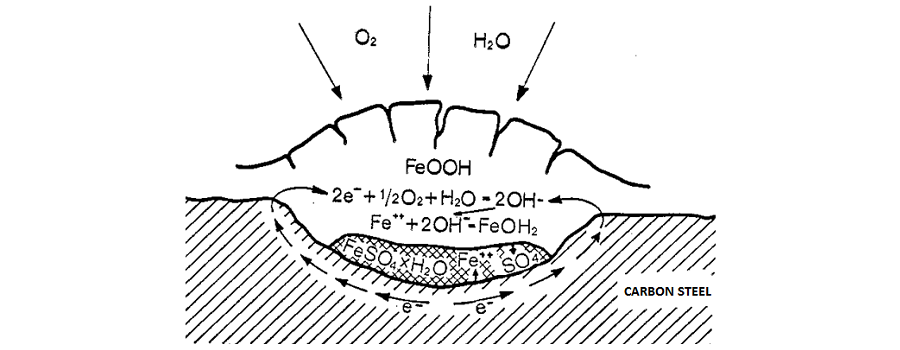
The Aim of a Cathodic Protection System is the change of the natural potential of a steel structure from the natural potential (-300mV up to -600mV referenced with a Cu/CuSO4 reference electrode) to such values so that the electrolytic phenomenon of oxidation of steel to be reversed.
The potential range in which the steel structure/object is considered
"protected" is defined in the international standards (mainly-850mV
up to -1250mV).
In case the above potential becomes more negative than -1250mV, electrolytic
phenomenon will occur and the production of H2 (Hydrogen) is expected on
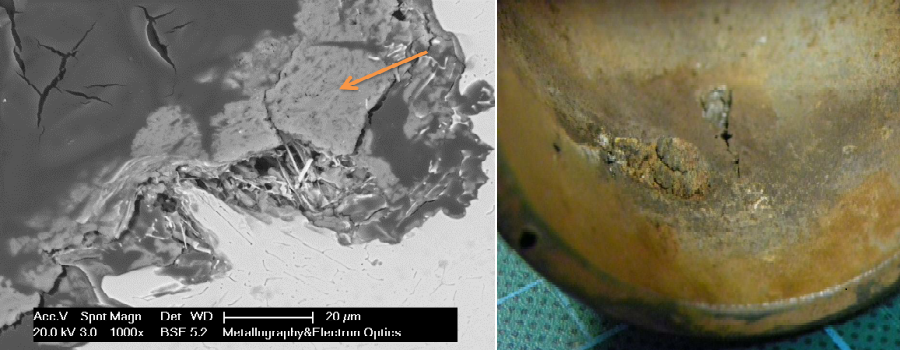
the surface. This will drive to separation of the coating/paint and stress
corrosion cracking on the steel surface.
The Implementation of a cathodic protection system is considered mandatory for
any electrolytic environment (mainly Water or soil) for the external surface of
the steel structure as well as the internal surface (pipelines, tanks, vessels
etc).
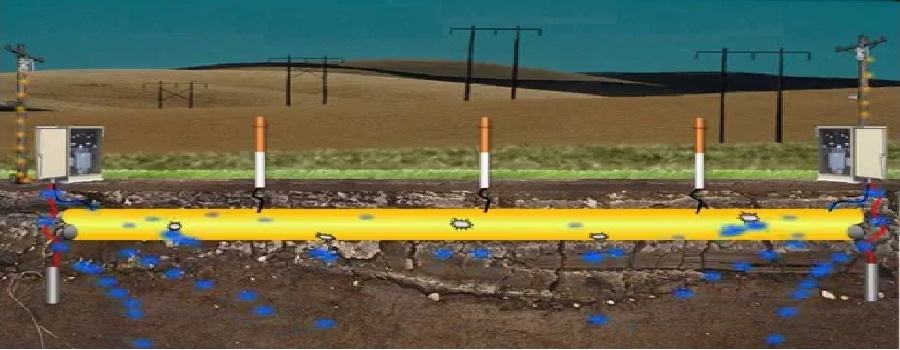
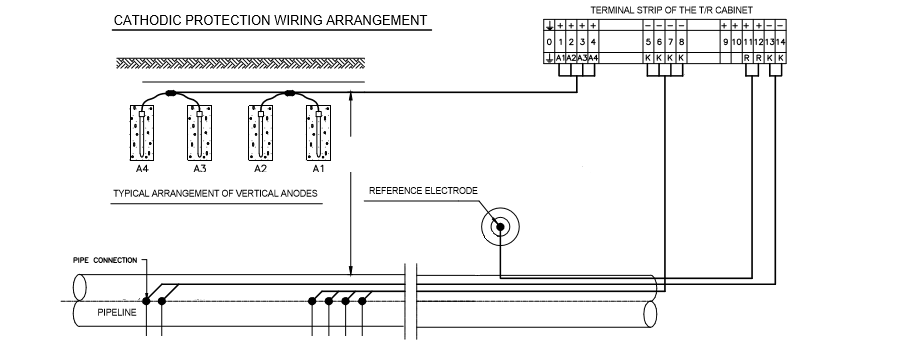
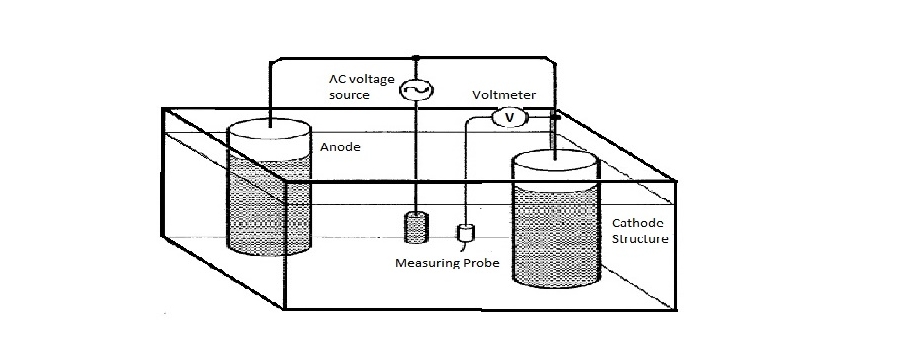
The design of the cathodic protection system is based on the creation of an
electrolytic cell (anode - cathode - electrolyte) respectively, the anodebed -
the under protection structure - the surrounding environment (soil or water).
The required current for the cathodic protection process can be supplied either by an impressed current source (transformer/rectifier unit - battery etc) or by the electrochemical phenomenon of the potential difference between two metallic elements in that case the most negative element is called scarificial anode (this can be Al, Zn or Mg).